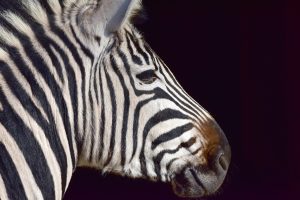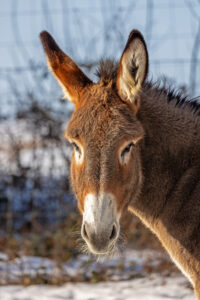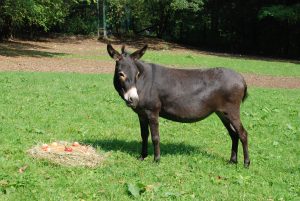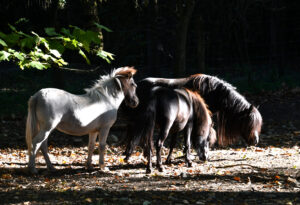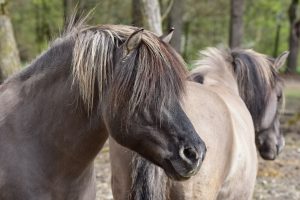
Odd-toed ungulates (Perissodactyla), unlike even-toed ungulates (artiodactyls), have an odd number of toes, with most of their body weight supported by the central third toe. Today, only three families remain: horses, rhinoceroses and tapirs. As herbivores, they have special adaptations for digesting fibrous plant material. Unlike ruminants, they rely mainly on microorganisms in their well-developed caecum and large intestine, a digestive strategy known as hindgut fermentation.
…that horses walk on just one toe? Over the course of evolution, the side toes of their ancestors became greatly reduced. The hoof we see today is the hardened outer covering of the greatly enlarged third toe.
…that horses cannot breathe through their mouths? They are obligate nasal breathers. Due to the unique arrangement of the soft palate and epiglottis, the airway is separated from the mouth, so air enters the lungs exclusively through the nostrils.
…that the largest known land mammal was probably an odd-toed ungulate? Paraceratherium, a hornless relative of modern rhinoceroses, lived in Eurasia around 20–30 million years ago and probably weighed more than 10 tonnes.