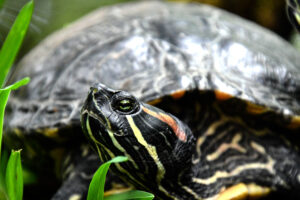
Reptiles are a diverse group of vertebrates characterised, among other features, by dry skin covered with scales or plates. As ectothermic animals, they rely on external heat sources and move between sun and shade to regulate their body temperature. Most reptiles lay eggs with protective shells, allowing them to reproduce independently of water. Today, more than 12,000 species are known worldwide, including turtles and tortoises, crocodilians, lizards, snakes and tuataras.
…that in many reptiles, including turtles, crocodilians and some lizards, sex is determined not by genetics but by the temperature at which the eggs develop?
This fascinating phenomenon is known as temperature-dependent sex determination (TSD). In many turtle species, warmer nests produce mostly females, while cooler nests produce more males. As climate change causes temperatures to rise, some populations are increasingly at risk of developing highly unbalanced sex ratios.