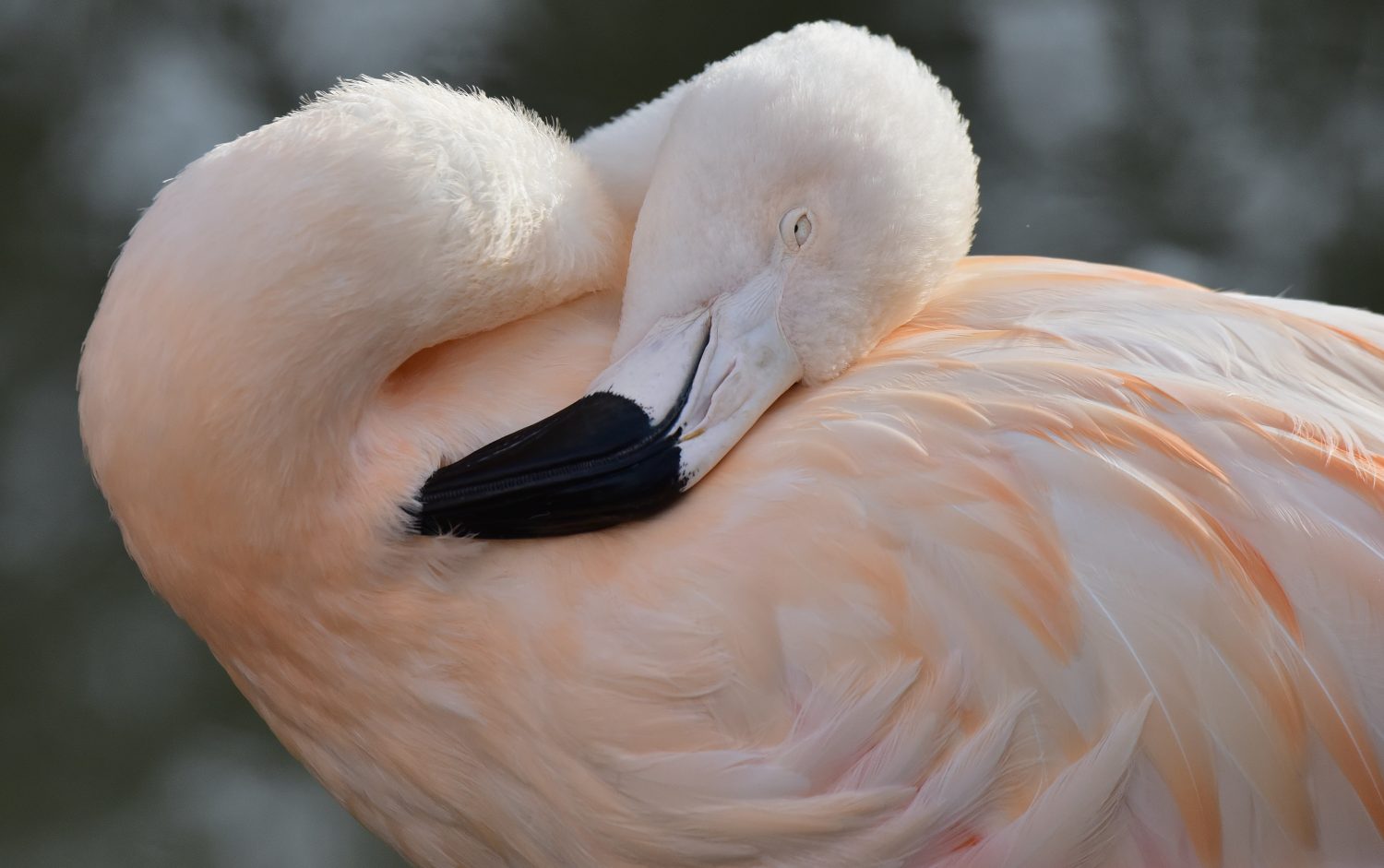
Distribution area: South America
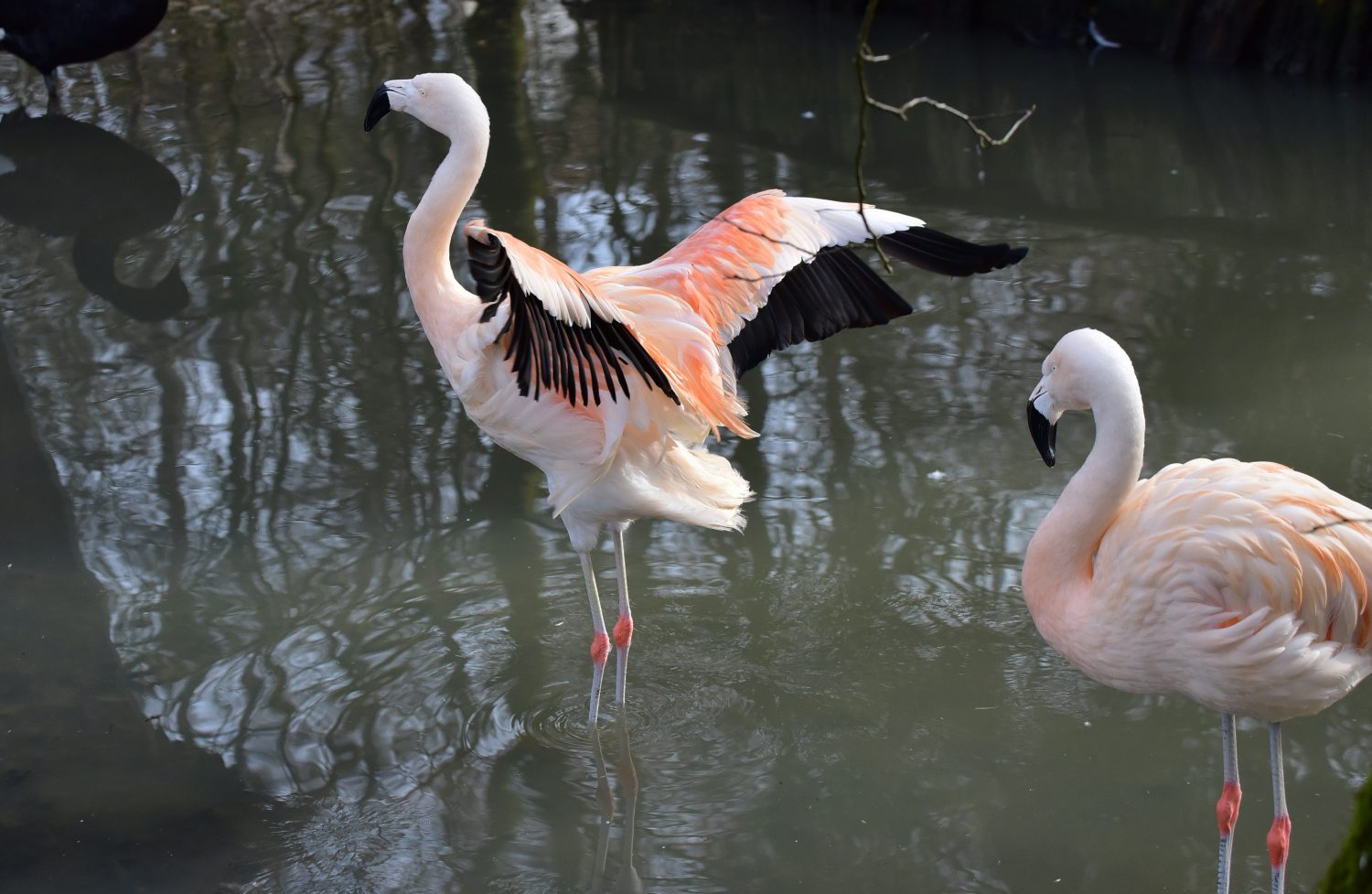
Characteristic: grey legs with strongly red colored intersal joints
Distribution area: Europe (Atlantic coast, Mediterranean coasts and some Mediterranean islands)
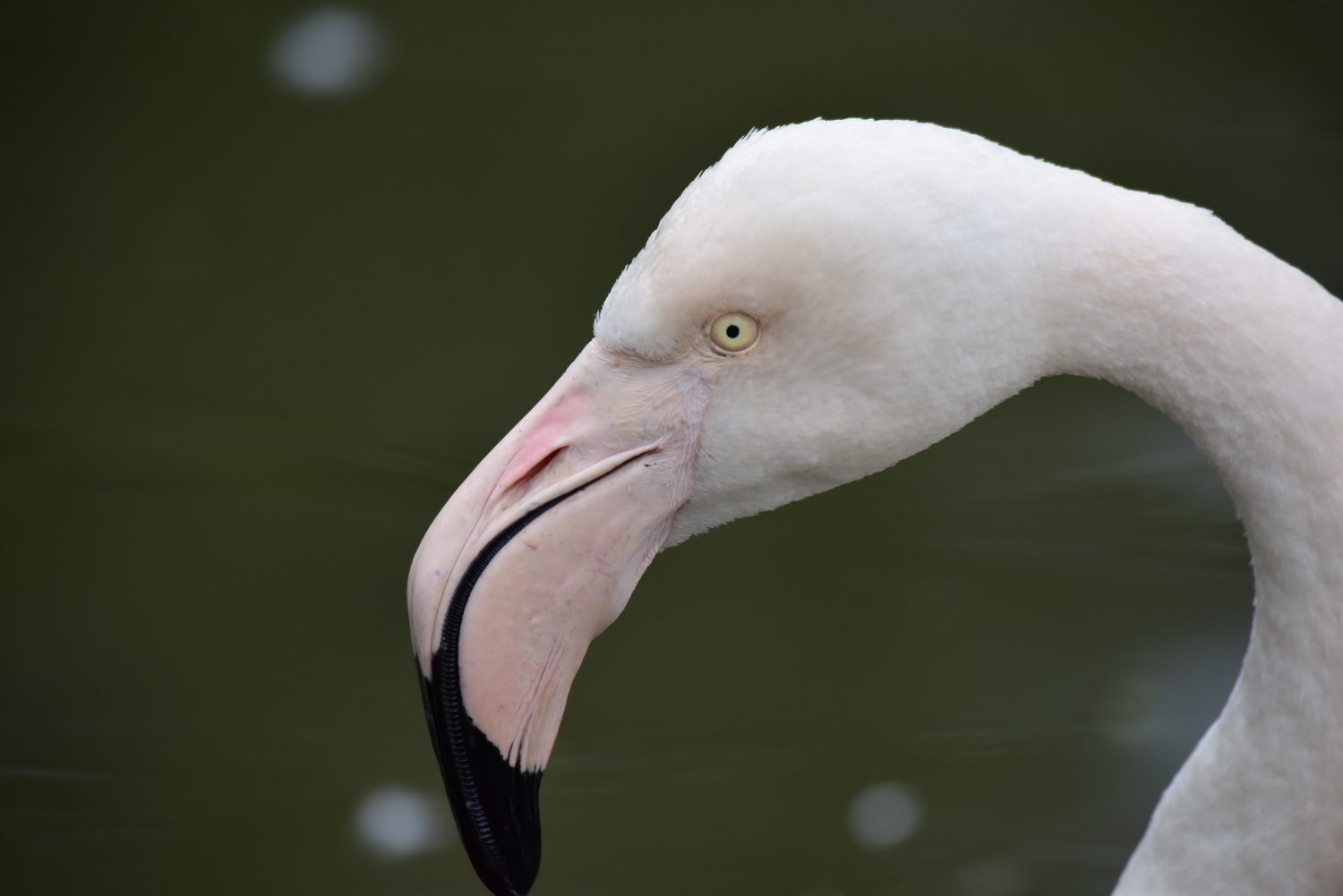
Feature: largest flamingo species, legs of adult birds pink, pink beak with black tip.
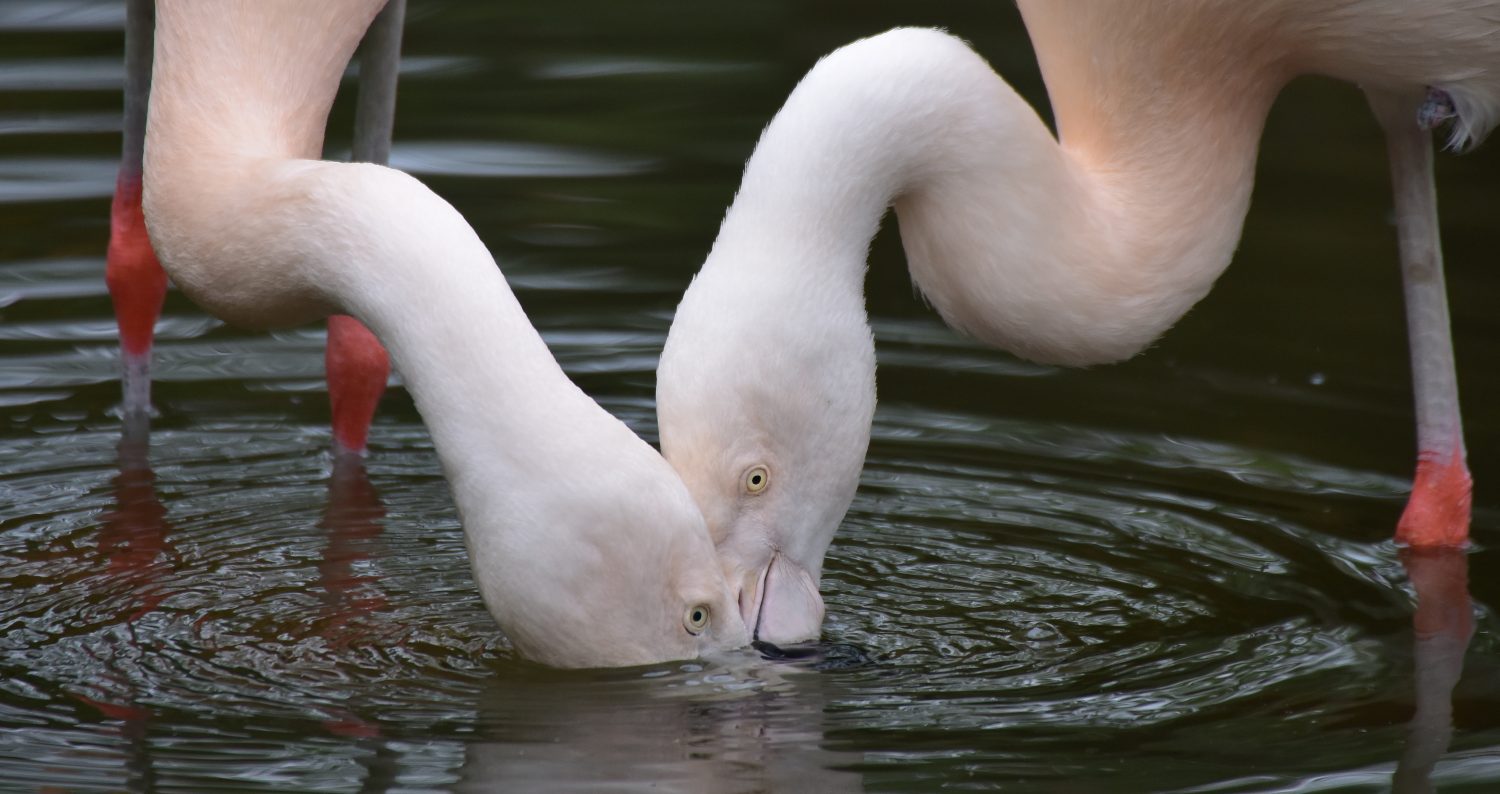
The beak of the flamingos is unique in the bird world. It is built like a special filter with which they filter tiny creatures from the water. With their beak they suck in the water and then squeeze it out again. The food particles get caught in the filter apparatus of their lamellae and can be transported with the tongue into the throat and swallowed. Small crustaceans in particular contain many dyes (carotenoids) which are stored in the feathers and cause the red colouring. Without absorption of these dyes, the flamingos remain white.
Flamingos only sleep on one leg. This is made possible by a special joint: when the leg is stretched, the joint snaps into place like a pocket knife, and the bird stands securely and does not buckle.
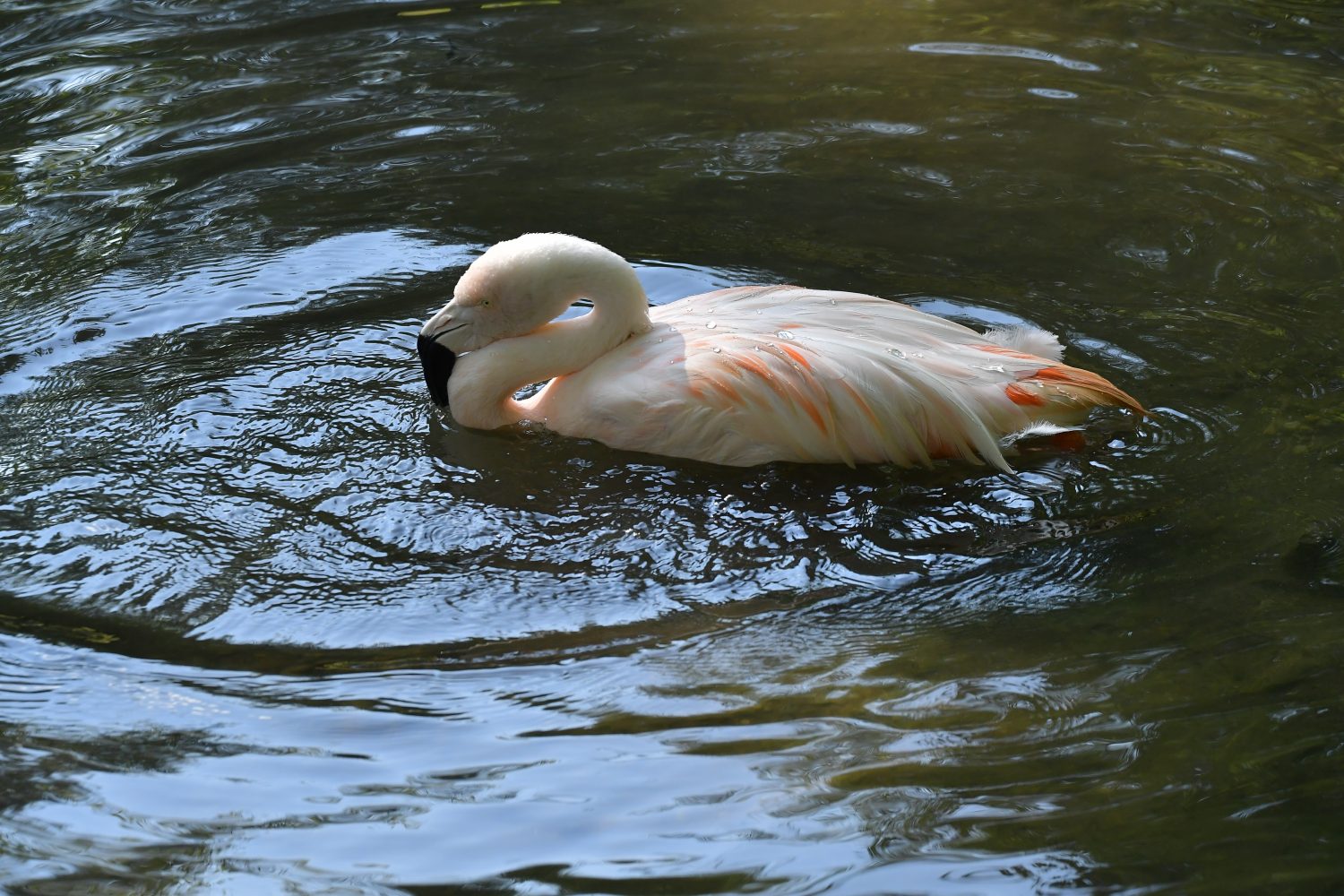
The long neck is placed in front of the chest and the head is then bent onto the back and hidden under the shoulder feathers of the wings. One leg regularly carries the weight of the body. The other leg is either stretched out obliquely to the back or folded up and pulled up to the belly.